
Understanding the real forces behind your budget overruns, and practical steps to protect yourself
There is a specific kind of pain that comes with building a house right now. You save for years, get your drawings done, price your materials and then, somewhere between laying the foundation and raising the roof, the budget quietly doubles. You are not alone, the problem runs much deeper than your contractor’s estimate.
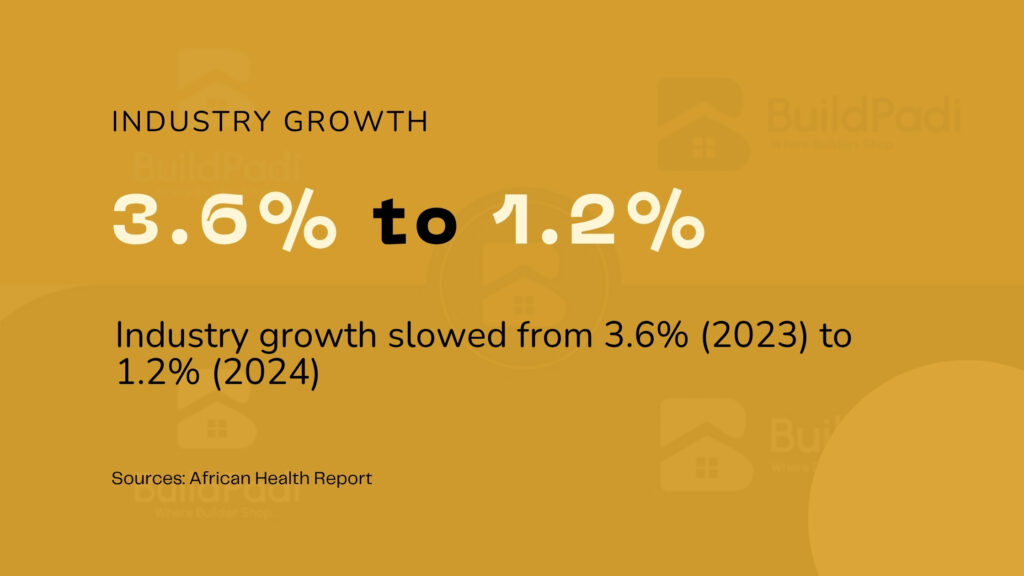
The construction industry’s growth slowed from 3.6% in 2023 to just 1.2% in 2024, weighed down by inflation, high interest rates, and escalating material costs. Meanwhile, more than 28 million people lack access to adequate housing, while over 11,856 construction projects have been abandoned nationwide (Africa Health Report). The dream of building is being strangled by economics.
So what exactly is happening, and what can you realistically do about it?
The Forces Driving Costs Up
1. Inflation
The general economy has had a rough few years, but the construction sector has taken a disproportionate beating. While headline inflation hovered between 30–34% for most of 2025 before easing slightly, construction sector inflation has been significantly higher, material costs alone increased by 30–90% depending on the category, with steel and cement leading the increases.
To put that in concrete terms: cement prices jumped from ₦5,000–7,500 per bag in August 2024 to ₦9,500–10,400 per bag by September 2025 — a 30–53% increase in just over a year (e.ccement). And that is cement alone. Steel and iron rod prices have more than doubled since 2023, now sitting at ₦1,000,000–1,100,000 per ton, reflecting both global steel market conditions and heavy dependence on imported raw materials (nairametrics).
The effect on active projects has been severe. Developers report cost overruns of 25–40% year-over-year for projects that began in 2024 and continued into 2025, forcing many to redesign, seek additional financing, or pause construction entirely.
This is exactly the kind of market where having live, reliable price data matters. BuildPadi tracks current prices across building material categories so you are never budgeting blind.
2. Currency Pressure
One of the less visible forces is the exchange rate but its effect on building projects is very visible. When the local currency weakens, anything that is imported gets more expensive almost overnight, and the construction sector imports a lot.
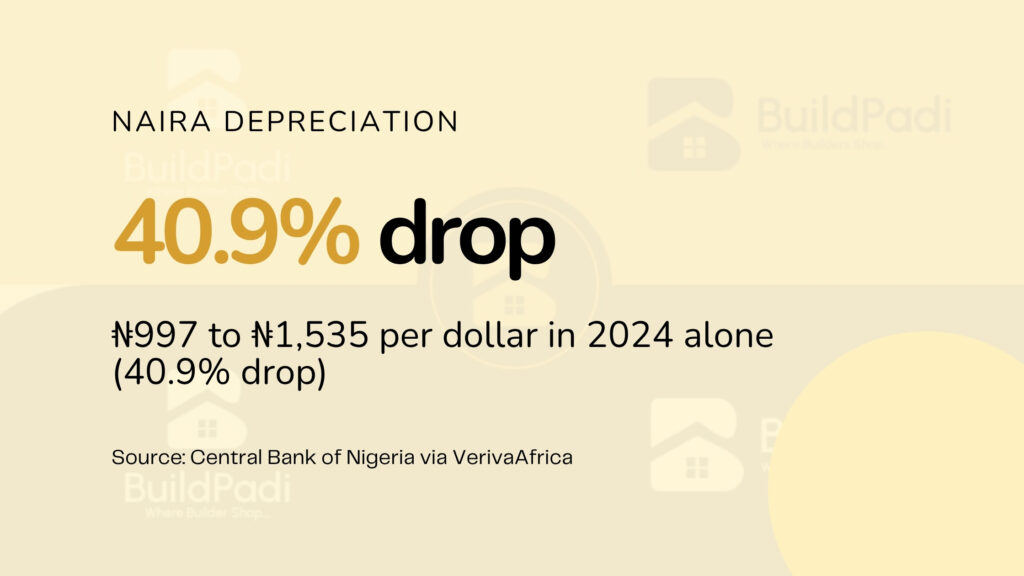
Some estimates put 80% of construction inputs (besides cement) on foreign purchase (businessday). So when the naira depreciates, imported tiles, aluminium, pipes, electrical fittings, and finishing materials all become more expensive in local terms. According to data from the Central Bank of Nigeria, the official exchange rate closed 2024 at ₦1,535 per US dollar — a 40.9% depreciation within a single year (Verivafrica). This does not leave a project budget intact.
The cost gap between imported and locally sourced construction materials has also widened, with imported materials now costing 15–30% more than their locally sourced equivalents.
3. Fuel Costs
This one is easy to overlook until you trace a bag of cement from a factory to a building site hundreds of kilometres away, or a lorry of granite from a quarry to a plot in a busy city. Every kilometre of that journey is priced in fuel.
Fuel prices have become the invisible hand reshaping the construction industry. From quarry sites to urban markets, the cost of moving materials now dictates their final price. The chain is straightforward: fuel drives transport costs, transport inflates material prices, and rising material costs stall construction projects (Africa Health Report).
When fuel subsidies were removed in May 2023, the pump price of petrol surged from ₦195 to ₦540 per litre in June, reaching ₦617 by July, significantly impacting transportation costs across the economy (Autogirl). Building materials, already heavy and expensive to move, absorbed much of that shock directly into their final prices.
4. Expensive Places to Build
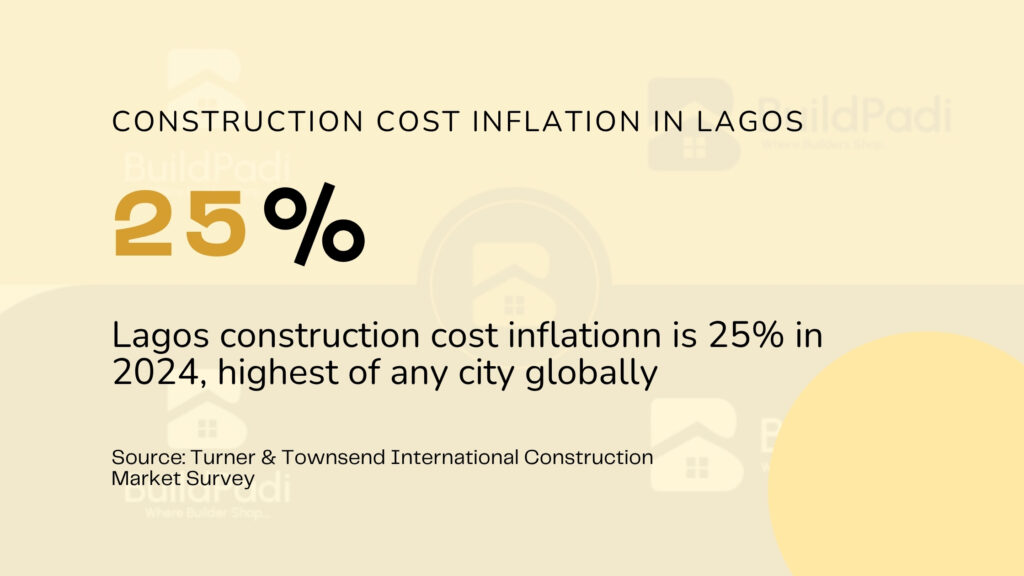
This is not hyperbole. According to Turner & Townsend’s International Construction Market Survey, Africa leads the world in construction cost inflation, with Lagos alone recording an estimated rise of 25% — the highest of any city surveyed globally in 2024 (Turnerandtownsend). The report attributed this to higher import prices driven by exchange rate pass-through, rising materials and labour costs, and prolonged infrastructural deficits.
If you are building in Lagos or any other major city, you are operating in one of the most volatile construction cost environments on earth. Comparing supplier prices before you buy is how you protect your budget. BuildPadi makes that comparison quick and straightforward, connecting you directly with verified suppliers across the country.
5. Permits and Delays
Beyond materials and labour, there are costs that people rarely budget for upfront. Obtaining approvals for a legal construction can take years, with developers facing multi-agency checks, unclear zoning rules, and sudden policy shifts. Every month of delay is a month during which material prices can shift.
The numbers are real. One Lagos homeowner budgeted ₦28M for a 3-bedroom bungalow but spent ₦36M — the extras included additional permits (₦800K), design changes (₦2.5M), and material price increases during construction (₦4.5M) (Listedbyowners).
What You Can Actually Do
None of this is meant to be discouraging. Understanding the problem is the first step to building smarter within it. Here is what can genuinely help.
Lock in prices before you start, not during
Material prices in the current market do not wait for you to be ready. If your project is approved and financed, negotiate bulk purchases with suppliers before breaking ground where possible. Get written quotes and push for price validity windows. You will not always succeed, but even locking in the price of cement or iron rods for 30–60 days can make a meaningful difference. On BuildPadi, you can browse current prices and reach out to suppliers directly.
Budget a contingency
Most experts advise adding 20% to your total estimated cost for unforeseen expenses. In Nigeria’s volatile construction market, this contingency often proves insufficient. A 20% contingency is a floor, not a ceiling. If you can stretch to 25–30%, do it.
Prioritise locally made materials where quality holds
Imported construction materials now carry a 15–30% premium over their locally sourced equivalents. For many categories; blocks, some tiles, locally fabricated metalwork, the quality is comparable and the savings are real. Ask your builder specifically which materials have local alternatives that meet standard, and cross-check against quality benchmarks from the Standards Organisation of Nigeria (SON). BuildPadi lists both local and imported options so you can make that call with full visibility on price.
Understand your region’s cost dynamics
Not everywhere carries the same price tag. Areas outside major cities typically benefit from lower land and labour costs. Regions in the South-South, North-Central, and some parts of the Southwest offer more budget-friendly construction opportunities without compromising quality. If you have flexibility in your build location, this is worth factoring in seriously.
Consider phased construction
Building in phases is a smart financial strategy. Rather than borrowing aggressively to complete a house in one stretch at today’s prices, completing the structure in phases allows you to pause, reassess the market, and recommence when conditions are more favourable. The key is ensuring that whatever phase you complete is weatherproof and structurally sound as a standalone unit.
Read your contract carefully before signing
If you are hiring a contractor, understand what you are agreeing to. Nigerian law requires builders to honour quoted prices, but most contracts include escalation clauses for materials, review these carefully before signing. Some clauses are reasonable; others leave you fully exposed to any price movement during the build.
Time your purchases strategically
Material prices often drop 5–10% during the rainy season when construction activity slows (Listedbyowners). This is not a guarantee, and the broader inflationary trend can override seasonal patterns, but if you have flexibility on your timeline, purchasing heavy materials between May and September can shave costs meaningfully.
The Bigger Picture
The cost crisis in construction is not accidental and it is not going away quickly. It is the result of macro-economic forces that have compounded over years and landed hardest on people trying to build homes and businesses.
Experts argue that investing in local production of building materials is essential to reduce dependence on imports and shield the sector from foreign exchange shocks. Without such structural reforms, the current cycle is likely to persist — one where every economic shift reverberates through the construction industry, and ultimately, into the homes ordinary people can no longer afford to build (Africa Health Report).
That systemic change will not happen overnight. But what you can control is how informed your decisions are and in a market this volatile, information is money saved.
Every naira you save on materials is a naira that stays in your project. BuildPadi is Nigeria’s digital marketplace for building materials, giving you real prices, verified suppliers, and the ability to compare and buy in one place.
Whether you are just starting to plan or already mid-build, visit BuildPadi today and take the guesswork out of your next purchase.
Shop smarter. Build better. Start on BuildPadi.
Sources
African Health Report — Nigeria Housing Crisis: Rising Building Costs Bite Hard (April 2025) | Turner & Townsend International Construction Market Survey 2024 | Baay Realty — Nigeria Real Estate Forecast 2026 | IMF Country Report Nigeria 2025 | Central Bank of Nigeria via VerivaAfrica — Naira Devaluation Impact (2024) | Dutum Group — Cost of Building a House in Nigeria (2025) | listedbyowners.com.ng — Building Cost Nigeria 2025 | Autogirl — Fuel Price Evolution in Nigeria 1973–2024 | businessday.ng — How FG’s building material hubs will tackle escalating housing costs, deficits
 No products in the cart.