
Simple checks you can do at the market or on-site
Bad cement doesn’t show itself until it’s already inside your walls. By then, the cracks have appeared, the plaster is peeling, and the repairs cost more than the savings were worth. The good news is that a few simple checks can tell you a lot about what you’re actually buying.
No equipment needed. Just your hands, a bucket of water, and about five minutes.
Check the Date First
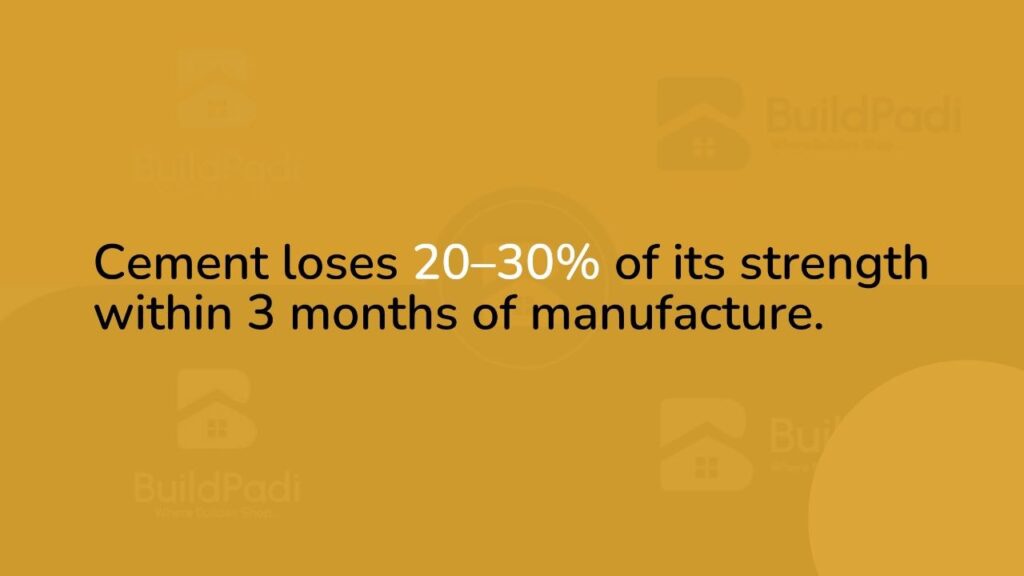
Before you touch the bag, look for the manufacturing date. It’s crucial to use cement within 90 days of its manufacturing date — by the three-month mark, strength can decrease by around 20–30% from its initial value. If the date is missing, faded, or the supplier can’t tell you when the batch arrived, that alone is reason to look elsewhere.
If you’re not sure what a bag of cement should cost right now, check our Building Materials Prices in Nigeria 2026, knowing the current market rate helps you spot bags that are priced too low to be trustworthy.
Feel the Temperature
Insert your hand into the bag. If the cement feels cool to touch, that’s a good sign — it means the cement is fresh. If it feels warm, it indicates the cement has come into contact with moisture. Moisture starts the chemical reaction that gives cement its strength. Once that process begins in the bag, you’re buying a weaker product.
Check for Lumps
Check for hard lumps inside the bag. If you find lumps, it means the cement has absorbed moisture from the air and has already started setting, already losing its strength even before mixing. Run your hand through the bag. It should feel like fine, free-flowing powder throughout.

Rub It Between Your Fingers
Take a pinch of cement and rub it between your fingers — it should feel smooth and fine, like talcum powder. If it feels gritty or coarse, the cement may have been adulterated with sand, which reduces its binding strength.
The Float Test
Take a small amount of cement and gently drop it into a bucket of water. Good quality cement will float momentarily before sinking gradually. If it sinks immediately, it may contain impurities. If it continues to float for too long, it may be excessively mixed with dust or lightweight materials.
The Setting Test (If You Have 24 Hours)
This one takes patience but gives you real confirmation. Mix a small quantity of cement with water to form a thick paste. Place this paste on a flat surface and keep it submerged in water for 24 hours. If cracks appear, it’s poor quality cement. If no cracks are visible, the cement has proper setting strength.
One More Thing: Look for the SON Mark
Ensure your cement meets SON (Standards Organisation of Nigeria) or ISO certification standards. Reputable brands print this on the bag. If you can’t find any certification marking and the price seems suspiciously low, trust your gut.
Buying substandard cement to save a few thousand naira is one of the hidden reasons building projects end up costing far more than budgeted. Our article on Why Building Costs Keep Increasing And What You Can Do breaks down the bigger picture and what you can actually control.
Before you head to the market, check current cement prices across suppliers on BuildPadi — knowing what a bag should actually cost helps you spot the ones that are too cheap to be good.
Sources
- JSW One MSME — Cement quality tests: jswonemsme.com
- CONSTRUCTIONtuts — Steps to Test Quality of Cement: constructiontuts.com
- Bangur Cement — Field testing guide: bangurcement.com

 No products in the cart.